Home > Case Studies > John Wiley & Sons

John Wiley & Sons reengineers its applications for the Web

John Wiley & Sons logoJohn Wiley & Sons is a leading publisher of print and electronic products, specializing in scientific, technical, medical and scholarly journals, encyclopedias, books, and online products and services. Headquartered in New Jersey, Wiley has operations in the United States, Europe, Canada, Asia, and Australia. Wiley used RAMP to rapidly reengineer its applications for the Web as part of a project to take its systems global.

  1. Globalizing and Modernizing
  2. Incremental Delivery
  3. Integrating the Old and New
  4. Speed of Delivery
  5. Company and System Information

Globalizing and Modernizing

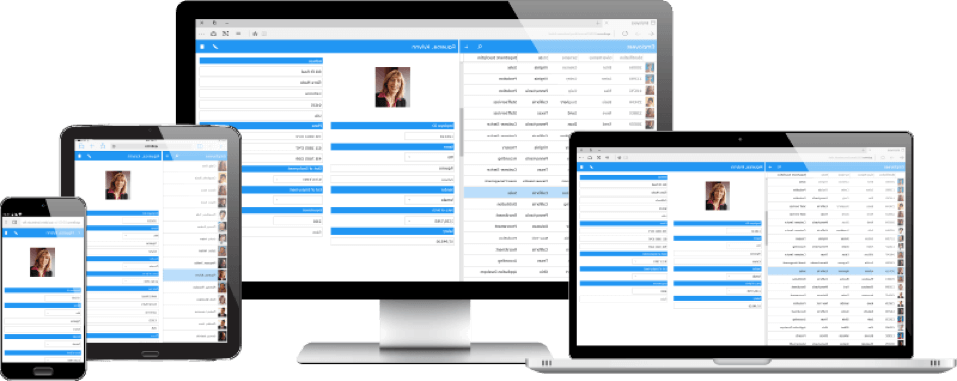
Modernized Title/Specs/Scheduling application, part of John Wiley's Book Project Management system.
Modernized Title/Specs/Scheduling
application, part of John Wiley's Book
Project Management system.

Wiley recently decided to restructure from a geographically managed to a globally managed set of businesses. To facilitate this shift, systems used in some regions had to be replaced or merged into one global system. In particular, the company’s Book Project Management (BPM) system used a mix of green-screen and Web-based interfaces, but to take it global, the application had to be accessible through the Web.

Beyond globalizing the BPM system, Wiley wanted to modernize its green-screens, provide a Web look and feel, and easily integrate with other systems. Furthermore, the system had to be accessible by a broad audience because, in addition to Wiley employees, it’s also used by editors, editorial assistants, and college personnel.

"The system used a mix of green-screen and Web-based interfaces and had to be accessible by a broad audience through the Web"

Incremental Delivery

Wiley met this challenge with RAMP from LANSA. RAMP provides an application development framework that combines green-screen functionality with new visual components in a rich graphical user interface. RAMP can integrate existing 5250 screens and batch jobs with new components that can run on IBM i, Windows, Unix, or Linux servers in a Web browser or as Windows rich-client applications.

Application reengineering with RAMP includes three steps: First, use the Application Framework to design a new system that eliminates the constraints and cumbersome navigation found in both 5250 and refaced applications. Next, selectively capture functionality from existing applications and plug it into the Application Framework, thereby retaining your investment in program logic. Finally, incrementally deliver high-priority enhancements to gradually reengineer or extend your applications.

Wiley considered other options, such as screen scraping and a total rewrite, but neither alternative provided the full benefits of RAMP. Screen scraping didn’t offer the same level of application integration as RAMP. And a rewrite would have been costly and error prone because existing business logic would have been discarded.

"Screen scraping doesn't offer the same level of application integration as RAMP and a rewrite would have been costly"

Integrating the Old and New

Wiley is the publisher of many different poplular brands & imprints including Jacaranda, For Dummies, Betty Crocker, Webster's New World, WROX and many more.
Wiley is the publisher of many different
popular brands including Jacaranda,
For Dummies, Betty Crocker, Webster's
New World, WROX and many more.

Wiley outsourced much of the reengineering work, and both Wiley staff and the outsourcing company used RAMP to perform their tasks. This made it easy to integrate the work of both teams.

Rather than a "big bang" approach, Wiley rolled out individual modules as they were ready. The ability of the RAMP Application Framework to integrate old and new modules made this a very effective technique.

Stephen Foster, director of systems development at Wiley reports that getting started with RAMP was fast and easy. "We have a couple of developers here who are using RAMP. They just picked it up and ran with it, without the need for any training."

"The ability of the RAMP Application Framework to integrate old and new modules provides a very effective technique for incremental delivery"

Speed of Delivery

RAMP allowed Wiley to protect its application investment while moving onto the Web very quickly. "We have a lot of business rules built into our green screens," explained Foster. "Rewriting them would have involved a lot of time and a huge cost. RAMP got us quickly to the Web, without having to rewrite our backend systems. We were able to take our current RPG code and run it through the Web. That provided the biggest benefit of RAMP: Speed of delivery."

Foster concluded, "RAMP has been a big success for us. Even people who were totally green-screen people have gotten onto the Web, and they are extremely happy. And they are not looking back. That’s a tremendous accomplishment."

"RAMP got us quickly to the Web, without having to rewrite our backend systems"

Company and System Information

John Wiley & Sons logo
  • With about 5,100 employees worldwide, Wiley has operations in the United States, Europe (the UK, Denmark, Germany and Russia), Canada, Asia, and Australia. Wiley's worldwide headquarters are located in Hoboken, New Jersey. Wiley content travels well. Approximately 50% of the company's revenue is generated outside the United States.
  • For more information visit Wiley at: www.wiley.com

  • RAMP provides a modernization framework that consolidates existing 5250 functionality with new components in a rich graphical user interface. Find out more about RAMP